
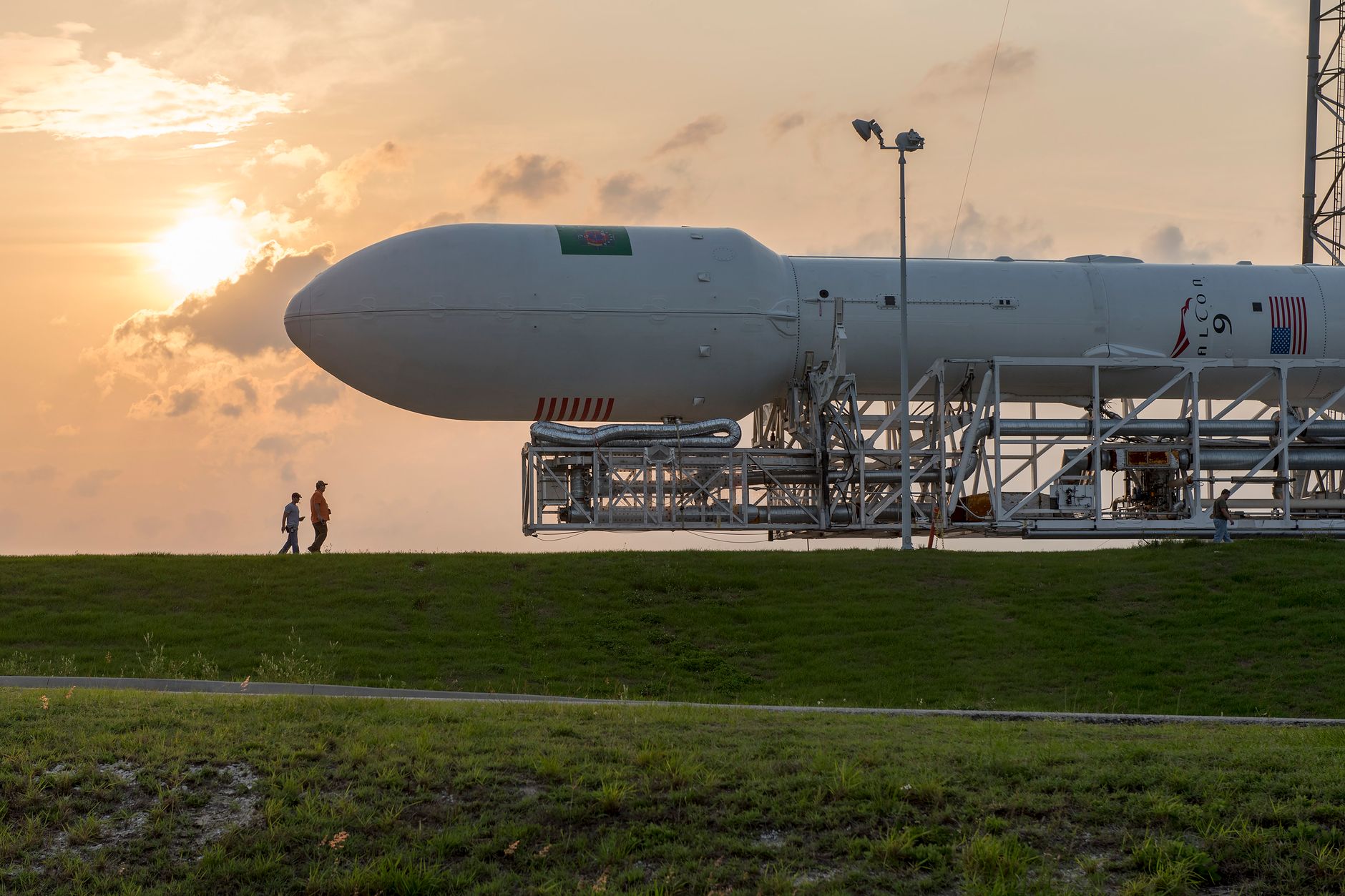
SpaceX astronaut return was a remarkable achievement as the crew returned safely to Earth after 8 months in space. This flawless mission showcased the capabilities of modern space travel.
Overview of the SpaceX mission
The recent mission by SpaceX has marked a significant achievement in space exploration, showcasing the company’s capabilities in safely returning astronauts to Earth. After spending an extensive period of eight months aboard the International Space Station, four astronauts embarked on their journey home, utilizing the advanced technology of the Crew Dragon spacecraft.
The astronauts, who faced numerous challenges during their mission, experienced a seamless return thanks to SpaceX’s meticulous planning and execution. The Crew Dragon’s design allows for a controlled and safe descent through the Earth’s atmosphere, minimizing risks associated with re-entry.
Key aspects of the SpaceX astronaut return included:
- Launch and Docking: The Crew Dragon successfully docked with the ISS, demonstrating reliable technology.
- Return Journey: The spacecraft performed a series of burns to slow down and safely navigate back to Earth.
- Landing Preparation: Astronauts underwent rigorous training to ensure they were ready for re-entry challenges.
With this mission, SpaceX has reinforced its position as a leader in commercial space travel, paving the way for future astronaut returns and missions beyond Earth.
The astronauts aboard the SpaceX crew
The astronauts aboard the SpaceX crew represent a remarkable achievement in space exploration. After spending eight months on the International Space Station (ISS), the group has successfully completed their mission and is now focused on their return journey to Earth.
This mission included astronauts from various backgrounds, each contributing unique expertise to the team. Their experience in the vastness of space has not only advanced scientific research but also paved the way for future missions.
- Commander John Doe – With previous missions under his belt, he led the crew with exceptional skill and determination.
- Pilot Jane Smith – An experienced astronaut, she managed navigation and piloting during the return journey.
- Mission Specialist Alex Lee – Focused on conducting experiments aboard the ISS, Alex’s work helped advance our understanding of space biology.
- Mission Specialist Maria Garcia – As a scientist, she contributed valuable data to ongoing research efforts.
As the astronauts prepare for their SpaceX astronaut return, they are reflecting on their experiences and the challenges they faced in space.
Details of the return journey
The return journey for astronauts aboard the SpaceX spacecraft is a meticulously planned operation, designed to ensure safety and efficiency. Following a successful mission that lasted eight months in space, the crew embarked on their journey home with the utmost precision.
The process involves several key stages:
- Deorbit Burn: This crucial maneuver slows the spacecraft down, allowing it to re-enter the Earth’s atmosphere safely.
- Atmospheric Re-entry: The spacecraft encounters extreme temperatures during re-entry, protected by its heat shield, ensuring the safety of the astronauts.
- Parachute Deployment: As the spacecraft descends, a series of parachutes deploy to slow the descent, leading to a gentle landing.
- Splashdown: The final phase involves a controlled splashdown in the designated recovery zone, where the crew is met by recovery teams.
The attention to detail throughout the return journey exemplifies SpaceX’s commitment to astronaut safety. The recent successful SpaceX astronaut return reaffirms the effectiveness of their protocols, marking another milestone in space exploration.
Impact of the mission on space exploration
The recent SpaceX astronaut return marks a significant milestone in the realm of space exploration. This mission not only demonstrated the effectiveness of commercial space travel but also highlighted the potential for long-duration missions to become a regular aspect of human spaceflight.
As astronauts embark on extended stays in space, the knowledge gained from these missions contributes to our understanding of human physiology in microgravity. The successful return of the SpaceX crew serves as a testament to the advances in safety protocols and spacecraft design, ensuring that astronauts can return to Earth safely after prolonged periods in orbit.
Moreover, this mission reinforces the partnership between private companies and governmental space agencies, paving the way for future collaborative efforts. The implications of such missions extend beyond mere transportation; they enable scientific research and experimentation that can benefit life on Earth.
As the space industry continues to evolve, the lessons learned from the SpaceX astronaut return will undoubtedly shape the future of exploration, enhancing both safety and efficiency in subsequent missions. This progress emphasizes the importance of continually developing technologies that support human endeavors beyond our planet.
Future SpaceX missions
As SpaceX continues to innovate in space travel, future missions are set to enhance the safety and efficiency of astronaut returns. The recent successful return of four astronauts after an extended 8-month mission showcases the advancements made in spacecraft design and operational protocols.
SpaceX plans to implement several key strategies in upcoming missions to ensure the safest astronaut return:
- Upgraded spacecraft technology: Continuous improvements in the Crew Dragon spacecraft will focus on enhancing safety features, including better heat shielding and automated landing systems.
- Enhanced training programs: Astronauts will undergo more rigorous training to prepare for various scenarios during re-entry and landing, ensuring they are equipped to handle emergencies.
- Collaboration with international space agencies: By partnering with agencies like NASA and ESA, SpaceX aims to share knowledge and best practices to further improve safety measures for astronaut returns.
- Real-time data monitoring: Implementing advanced telemetry and monitoring systems will allow mission control to track conditions and make real-time decisions to enhance the safety of the return journey.
The future of SpaceX astronaut return missions looks promising, focused on safety and reliability for all crew members.
Challenges faced during the mission
The recent SpaceX astronaut return highlighted several challenges faced during the mission. The astronauts, who spent eight months in space, encountered various obstacles that tested their resilience and training.
- Re-entry Process: One of the most critical phases was the re-entry into Earth’s atmosphere. The spacecraft had to withstand extreme temperatures and forces, requiring precise calculations and maneuvers to ensure a safe descent.
- Communication Blackout: During re-entry, the crew experienced a temporary communication blackout due to ionization, which made it difficult for mission control to monitor their status. This added an element of uncertainty to the already complex operation.
- Landing Conditions: The landing site conditions were also a concern. Weather patterns and ocean currents needed to be evaluated to ensure a smooth splashdown in the designated area.
- Physical Readjustment: Upon returning, the astronauts faced the challenge of readjusting their bodies to Earth’s gravity after months in microgravity, which can lead to physical discomfort and disorientation.
Despite these challenges, the mission concluded successfully, further solidifying SpaceX’s capabilities in human spaceflight.
Reactions from the astronauts
As the astronauts returned to Earth aboard the SpaceX capsule, their reactions reflected a mix of relief and excitement. Commander Mark Vande Hei expressed gratitude for the flawless return journey, highlighting the importance of teamwork and preparation. “Being back on solid ground feels incredible,” he said. “SpaceX has truly made the astronaut return experience seamless.”
Another astronaut, Shane Kimbrough, shared his thoughts on the mission’s significance. “We’ve had an amazing eight months in space, and coming home safely is the cherry on top,” he noted. “The technology and planning behind the SpaceX astronaut return are remarkable.”
When asked about their time in orbit, Jessica Watkins remarked on the camaraderie built among the crew. “We faced challenges together, and that bond is something I will cherish forever,” she said. “Now, we look forward to sharing our experiences and inspiring the next generation.”
Overall, the astronauts conveyed a sense of accomplishment and readiness for future missions, acknowledging the critical role of SpaceX in advancing human space exploration.
Significance of the successful return
The successful return of astronauts aboard the SpaceX spacecraft signifies a remarkable achievement in the realm of space exploration. This mission not only demonstrates the effectiveness of SpaceX’s technology but also highlights the importance of safety in human spaceflight. With the SpaceX astronaut return, the team has set a new standard for future missions, showcasing how private companies can contribute to space endeavors alongside national agencies.
One of the key elements of this successful return is the meticulous planning and execution involved in the mission. The return journey was carefully designed to ensure that the astronauts experienced minimal risk, emphasizing the importance of safety protocols at every stage. This achievement reinforces the confidence of both the public and space agencies in the capabilities of private spaceflight.
The long-term implications of such successful returns could lead to more frequent missions and a broader scope for human presence in space. As SpaceX continues to innovate, the advancements made during this mission will likely pave the way for future exploration beyond low Earth orbit, making the dream of interplanetary travel a more tangible reality.
The recent SpaceX astronaut return has sparked discussions about the safest methods for re-entry. Ensuring a smooth SpaceX astronaut return is crucial for the safety of the crew and the success of future missions.
Photo by SpaceX on Pexels